

WINDSHIELD & AUTO GLASS REPLACEMENT
Same-Day Estimates Available
Windshield & Auto Glass in Central Ohio
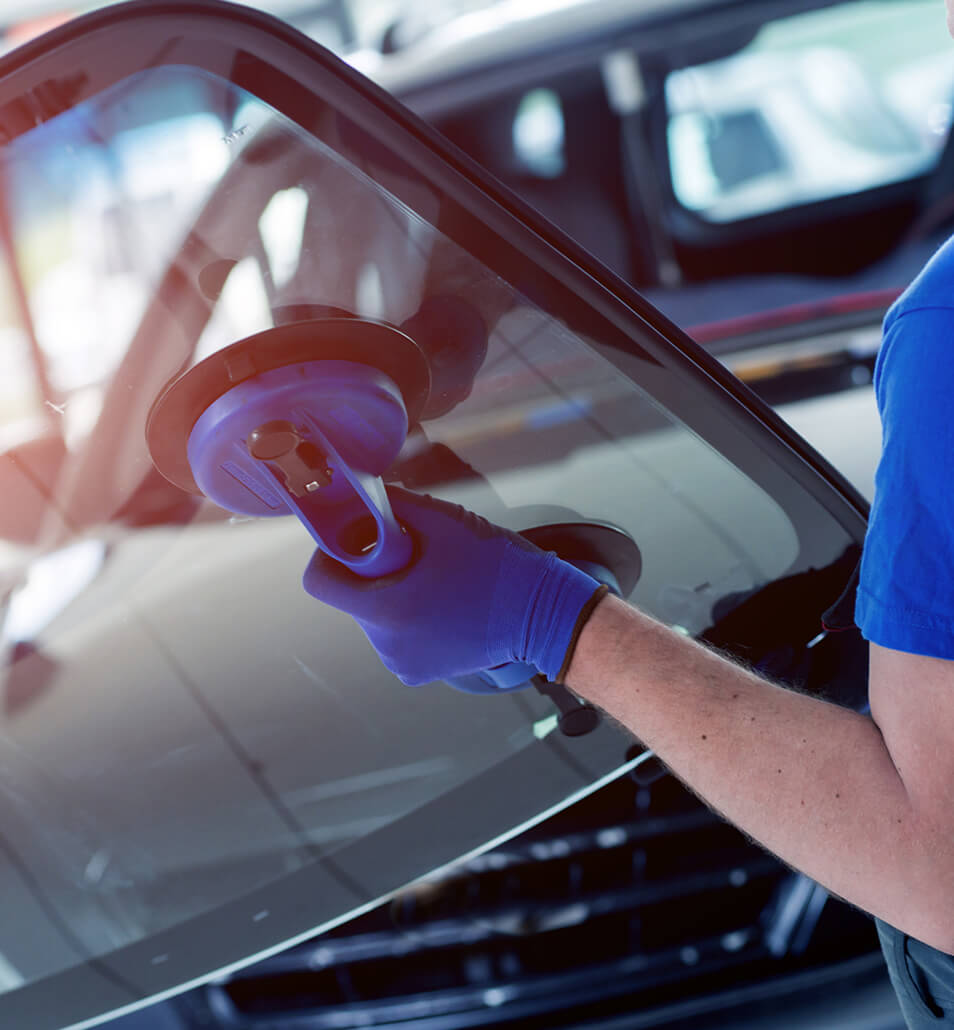
Setting the glass is the part you watch. Bonding it right — and re-aiming the camera behind it — is the part that counts.
A windshield is not really a window. It is bonded to the body with structural urethane, and on most vehicles it helps the roof hold its shape in a rollover and gives the passenger airbag a surface to deploy against. It belongs to the safety cage. So how it goes in matters at least as much as what it costs — the bead, the primer, the state of the pinchweld beneath it, and how long the adhesive is allowed to cure before anyone drives off.
And there is a camera peering through it. On most recent vehicles the forward-facing camera for lane keeping, automatic emergency braking and adaptive cruise rides on the glass or on a bracket bonded to it. Swap the glass and that camera has shifted — which makes glass replacement the single most common reason a vehicle needs an ADAS calibration. We handle the glass and the calibration together, in one place, and document both — part of how we follow OEM repair standards.
Not Drivable? Let Us Bring It In.
Free local towing is available to qualified customers based on location — just mention it when you open your case. Rental vehicles are available too, so you are not left sorting out a ride while your vehicle is with us.
Start Your RepairWhat You Can’t See in a Glass Job
A fresh windshield looks like a fresh windshield. Everything that decides whether it holds in a crash happens before the glass drops in, and vanishes the moment it does:
- Whether the forward camera was recalibrated afterward — skip it and there is usually no warning light to say so
- Whether the pinchweld was checked for rust and primed, or fresh urethane was laid straight over corrosion that keeps eating away underneath
- Whether the right urethane went on, and whether the car sat for the adhesive’s safe drive-away time before being handed back
- Whether single-use mouldings and clips were renewed or reused — the usual culprit behind wind noise and leaks weeks later
- Whether the glass matches what the vehicle actually needs: acoustic interlayer, solar coating, heated wiper park, humidity and rain sensors, head-up display
- Whether any optical distortion falls in the camera’s line of sight — glass that looks fine to you is not automatically fine to a lens
- Whether the old bead was trimmed to the correct height rather than cut back to bare metal
Why Drivers Choose T&C for Auto Glass
- Glass and calibration under one roof. No handoff to a third party, and no chance of the calibration slipping through the crack between two companies. We do both and document both.
- We repair chips when they can be repaired. A small chip caught early is faster and cheaper than a replacement, and it keeps the factory bond intact. We’ll tell you up front which one you’re dealing with.
- The right glass for the vehicle’s equipment. Sensors, heating elements, acoustic layers and head-up displays all change which part number is correct. The wrong glass will bolt in and still break something.
- Proper prep and full cure time. Pinchweld inspected and primed, correct urethane, new mouldings and clips — and we give you the safe drive-away time instead of handing back the keys early.
- I-CAR, ASE, PPG and 3M certified technicians and estimators. The estimating side counts here too — calibration that never lands on the estimate never gets performed.
- Documented, and detailed on the way out. You leave with a record of the glass fitted and the calibration performed, and the vehicle returns cleaned inside and out.
Quick Auto Glass Questions
The questions that come up most about chips, cracks and replacement. If yours isn’t here, call the shop at (614) 471-0505 — we’re glad to walk you through it.
Can my chip be repaired, or is a full windshield replacement needed?
It comes down to size, depth and location. Small chips and short cracks away from the edges can often be filled, which restores strength, halts the spread, and keeps the original factory bond — always the better outcome. Damage in the driver’s direct line of sight, close to an edge, or in front of a camera generally means replacement. Have it looked at early: chips travel with temperature swings, and a chip that’s repairable on Monday can be a replacement by Friday.
Is the windshield really part of my car’s structure?
It is. It’s bonded in with structural adhesive, not just set into a frame. On most vehicles it helps the roof resist crushing in a rollover and serves as the surface the passenger airbag pushes off when it inflates. A windshield that isn’t bonded correctly can let go at the exact moment you need it most — which is why how it’s installed is a safety question, not a cosmetic one.
Will I need an ADAS calibration after a windshield replacement?
On most recent vehicles, yes. The forward camera rides on the glass or on a bracket bonded to it, so replacing the glass moves it — even by an amount too small to notice. Since that camera is judging distances hundreds of feet ahead, a slight change in angle turns into a big error. We check what your specific vehicle requires and calibrate it here rather than sending you elsewhere.
How long before I can drive after a windshield is replaced?
Not right away. Urethane adhesive has a safe drive-away time — the point where it has cured enough to hold the glass in a crash. That interval depends on the product, the temperature and the humidity, and it’s a genuine number, not a formality. We’ll tell you what yours is before you go. Leaving early is the one shortcut that quietly undoes an otherwise correct install.
Does OEM versus aftermarket glass matter?
It matters more than it once did, and the reason is the camera. Aftermarket glass can be entirely fine, provided it matches the original in thickness, curvature and optical clarity through the camera’s field of view, and it has to carry the right features — acoustic interlayer, solar coating, heated wiper park, sensor mounts, head-up display compatibility. We’ll tell you what’s going on your vehicle, why, and what your policy covers.
My new windshield whistles or leaks — what happened?
Almost always one of three things: mouldings or clips reused when they’re meant for single use, an uneven or contaminated urethane bead, or glass that wasn’t seated at the right height. Wind noise and water coming in are signs of the bond itself, which is why they’re worth taking seriously rather than living with. Bring it in and we’ll pin down which it is.
Will my insurance cover the glass?
Glass is frequently handled under comprehensive coverage rather than collision, and plenty of policies treat chip repair differently from a full replacement. Coverage varies, so we’ll go through your specific situation with you and carry the claim conversation. A calibration the manufacturer requires after a replacement is part of restoring the vehicle, and we make that case as well.
Do you handle side and rear glass too?
Yes. Door glass, quarter glass and rear windows are a different job from a bonded windshield — most side glass is tempered and shatters into small pieces, so cleaning it out of the door and the interior is part of doing the work properly. If the glass broke in a collision, we take care of it alongside the rest of the repair rather than leaving it as a separate errand for you.
Do I need an appointment?
An appointment gets you in sooner, and you can request one online or send a photo of the chip or crack from your phone — often that’s enough for us to tell you whether it’s repairable before you drive over. If the vehicle isn’t safe to drive, call us and we’ll arrange the tow.


We welcome you as part of our family and are committed to providing you with the highest standards of customized services tailored to your individual needs



Address

Phone

Address
2856 Johnstown Road, Columbus, OH, 43219, USA

Hours of Operation
Monday-Friday: 8:00 AM - 5:00 PM
Share


©2026, Alpha Automotive, LLC
©Copyright 2025, T&C Body Shop